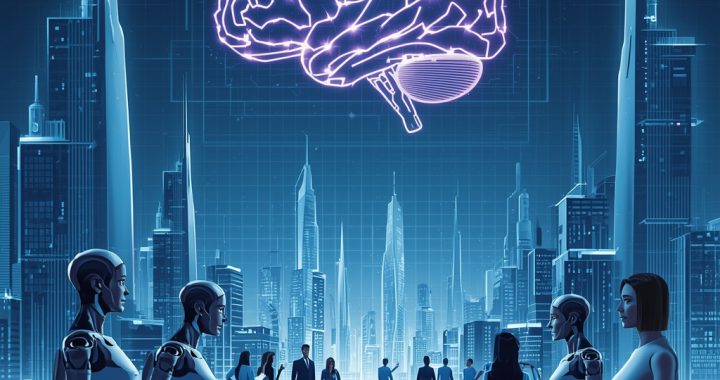
The Dark Side of Artificial Intelligence: Myths, Risks, and Ethics
Artificial Intelligence (AI) is already a part of our lives. It varies from recommendations on Netflix based on our choice to voice assistants such as Alexa and Siri. AI provides new ideas and convenience but also generates some serious concerns regarding privacy, ethics, and security.
In this blog post, we will talk about the dark side of artificial intelligence, such as myths, potential danger, and ethical issues involved.
1. Introduction: The Rise of Artificial Intelligence
Artificial Intelligence has developed at a very fast rate in the past ten years. It can now do the following:
- Produce text and images akin to human counterparts.
- Perform work in healthcare, finance, and education.
- Make data-driven decisions at a rate faster than a human.
But this sudden growth has created fear and confusion. Queries are made such as, “Will AI replace human beings entirely?” or “Will machines govern the world?”
In order to be able to perceive the true dangers, first we have to separate myths from realities.
2. Popular Myths About Artificial Intelligence
Let us examine some of the most well-known misconceptions about AI.
Myth 1: AI Will Replace All Human Jobs
Truth: AI automates repetitive work, but it creates new jobs in technology, data science, and AI maintenance.
Example: AI can never automate creative roles like designers, writers, or strategists; it simply makes their lives easier.
Myth 2: AI Can Think and Feel Like Humans
Truth: AI is not conscious, not emotional, nor morally judgmental.
It runs on patterns, algorithms, and facts, not intuition or sympathy.
Myth 3: AI Is Always Objective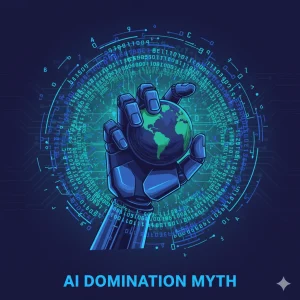
Myth: AI is biased since it learns from human data.
If the data is biased gender-wise, race-wise, or culture-wise, the AI will exhibit the same in its actions.
Myth 4: AI Will Control the World Soon
Truth: AI never has ambitions or desires.
The actual issue is about how humans implement AI, not AI itself.
By eliminating these myths, we can focus on the actual risks and ethical concerns that call for our attention.
3. The Actual Dangers of Artificial Intelligence
AI is strong, but strength involves responsibility. These are some actual dangers posed by AI technology.
a. Job Displacement and Economic Consequences
Automation has the potential to replace low-skilled and repetitive jobs like data entry, customer service, and manufacturing.
While AI opens new possibilities, it may widen the divide between skilled and unskilled labor.
Economies can fight back through reskilling and upskilling initiatives.
b. Data Privacy and Surveillance
AI systems are based on vast amounts of personal data.
Governments and business enterprises may abuse AI for mass surveillance or tracking user behavior.
Example: Facial recognition software has been criticized for invading privacy and eroding human rights.
c. Algorithmic Bias and Discrimination
- The AI models are trained from past data, which can contain human biasing.
- These biases can lead to discriminatory hiring, biased policing, or discriminatory lending.
Actual example: There have been instances of AI hiring instruments being discovered to discriminate against female candidates in favor of male candidates using biased training data.
d. Security and Cyber Threats
Cybercriminals can utilize AI to conduct automated phishing, hacking, or identity theft attacks.
Deepfakes, or artificial intelligence-made fake videos and audio, can spread misinformation, destroying reputations and public confidence.
e. Autonomous Weapons
- Perhaps the most threatening one is AI-based military systems.
- Autonomous weapons or drones capable of making kill decisions are ethically and humanitarily problematic.
- The issue is not just their potential to be abused but also their lack of accountability when they fail.
4. Ethical Problems with Artificial Intelligence
Apart from risks, AI also raises important ethical issues that we must solve.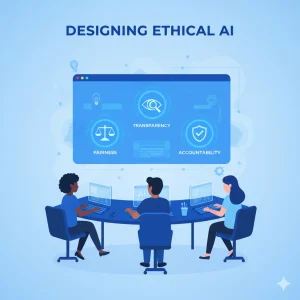
a. Who Is Responsible When AI Goes Wrong?
When there is an accident caused by an autonomous vehicle, who do we blame?
The programmer, the firm, or the algorithm?
Current legal frameworks are still not capable of dealing with such complex situations.
b. Transparency and Explainability
The majority of AI systems are “black boxes.”.
Even the programmers themselves can’t always explain how an algorithm reached a particular conclusion.
Transparency must be provided for ethical AI so that people understand how their information is being used.
c. Consent and Data Ownership
The majority of AI systems gather data without users’ explicit permission.
People deserve to know what information is being collected, how it is being used, and why.
Ethics frameworks embrace user consent and data privacy as essential values.
d. Manipulation and Misinformation
Fake news, manipulated content, and deepfake videos can be generated by AI.
It is therefore difficult to distinguish reality from lie, particularly in political campaigns or political elections.
The ethical challenge is: How do we control AI-generated content without restraining freedom of speech?
e. Inequality and Access
The majority of AI development exists in developed countries and large corporations.
This would lead to a digital divide where some people have access to AI benefits and others do not.
Equal access and inclusivity ought to be promoted by ethical AI.
5. The Role of Ethics in AI Development
Ethical AI is not a notion, but it is a requirement for a safe and just digital future.
a. Creating Responsible AI Systems
Companies must adopt “Ethics by Design” through the incorporation of fairness, accountability, and transparency into products right from design.
Independent audits must confirm AI systems for abuse or bias.
b. International Rules and Guidelines
States and institutions such as the UN and EU are establishing standards of AI ethics.
These seek to set boundaries on AI employment in surveillance, defense, and personal data aggregation.
c. Human-Centered AI
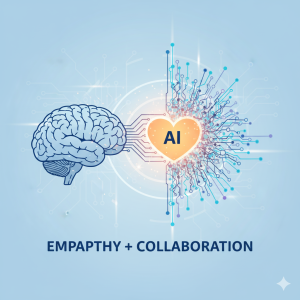
AI must aid human decision-making instead of mimicking it.
Having humans in charge means that ethical and emotive decision-making forms part of every choice.
d. Education and Awareness
The public should have a high level of awareness about AI ethics.
If the risks are known to the users, they can make smart choices regarding the use of technology.
6. Using AI Responsibly
AI is dangerous and powerful. To use it responsibly, individuals and groups should:
Be cognizant of the technology — Educate yourself first about how the AI systems work prior to using them.
Protect your information — Thoughtfully consider what personal information you post online.
Support transparent brands — Select companies that prioritize ethical AI and privacy.
Call out bias — Always question whether an AI tool generates objective and accurate results.
Keep up to date — Regularly learn more about the social and legal implications of AI.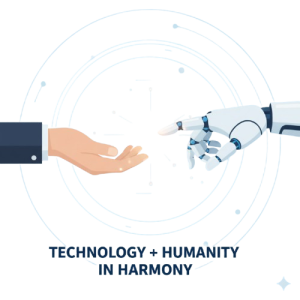
7. The Future of AI: Balance is Key
AI will continue to grow, but the issue is how to balance between ethics and innovation.
AI can enhance healthcare, learning, and sustainability if used correctly.
But left unregulated, it can contribute to inequality, privacy invasion, and loss of human agency.
We aim to establish ethical guidelines so that development can be done without compromising human values.
8. Conclusion: The Human Face of AI
Artificial Intelligence is not good or bad; it is good or bad as the humans who develop it. Its dark side becomes evil only when we lose ethics, empathy, and accountability.
We have to make the future of AI secure by:
- Encouraging ethical design and openness
- Minimizing bias and injustice
- Educating individuals about AI’s real effect
AI has the potential to be our best friend, but only if we use it wisely, intelligently, and responsibly.