What Is Google Ads? A Beginner’s Guide to Online Advertising (2025 Edition)
In the modern-day digital space, it is all about visibility. As great as your product or service may be, your audience has to find you. That’s where Google Ads-one of the most powerful online advertising platforms-comes in.
For any small business owner, content creator, or marketer, looking to gain access to millions of prospects to make a sale and grow a brand, understanding Google Ads is paramount.
This is the beginner’s guide to walking you through the description of what Google Ads is, how it works, types, benefits, and tips on how to get started, updated for 2025.
1. What is Google Ads?
Google AdWords, later renamed simply as Google Ads, is the web-based platform of Google that allows businesses to advertise on the giant search engine and its partner websites.
Be it any search on Google, say even “best running shoes” or “digital marketing services”; Google Ads will make sure that your business shows up right at the top and drives targeted visitors to your website.
That means Google Ads is a pay-per-click system, wherein the advertisers need to pay only when some target clicks on their ad.
2. Why Google Ads Matter in 2025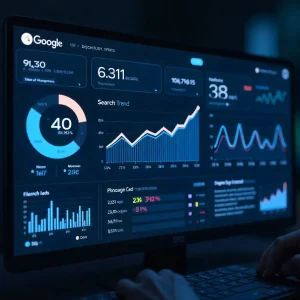
The online advertising world is moving fast, and still, Google is #1 among digital ad platforms worldwide.
Here is why it still matters in 2025:
- Reach Masses: Google receives over 8.5 billion searches daily.
- Laser Targeting: Your ads show only to users who are actually searching for what you have.
- Full control: You decide on your budget, keywords, and goals.
- AI-powered optimization: With Google, machine learning automatically improves ad performance.
- Data-intensive insights: Track every impression, click, and conversion in real-time.
Google Ads 2025 is leaner than ever, as AI keeps creating more ad automation and heuristics for audience targeting.
3. How Google Ads Work-Step by Step
You must understand how Google Ads works before you invest your first dollar.
Here is a simple breakdown:
Step 1: Identify Your Intention
Some of the varying campaign goals of Google Ads include:
- Improve website traffic
- Generate leads
- Improve online sales
- Encourage app installs
- Generate brand awareness
Choose whichever one fits your business goal.
Step 2: Choosing Campaign Type
Google Ads offers several types of campaigns, which will be reviewed later on. You are able to advertise on:
- Search results (text ads)
- Websites – display ads
- YouTube videos
- Mobile applications
- Google Maps
Step 3: Identify Keywords
These are the words your target is searching in Google.
Example: if you sell fitness equipment, you would want to target “buy gym equipment online.”
Google then posts your ad in view when someone conducts a keyword search.
Step 4: Setting Your Budget and Bidding
You determine how much you pay per click.
While higher bids give visibility, relevance and quality will always be more important.
Step 5: Create Your Ad
Catchy ad containing:
- A catchy headline
- A unique description
- Include a powerful call-to-action-for example, “Buy Now” or “Get a Free Quote.”
Step 6: Launch and Track
Once live, Google’s algorithm will show your ad to the right users at just the right time.
Afterwards, you can track the results through Google Ads Dashboard or Google Analytics.
4. Types of Google Ads Campaigns: An Overview, 2025
Within Google Ads, several types of campaigns exist that best suit your needs.
Here is a brief summary…
1. Search Ads: Text-based
These are the most common ads-text ads that appear on Google’s Search Results Page.
- Best for: Businesses targeting users who are active in their search for service.
- Example: “Affordable Web Design – Hire a Professional Today.”
2. Display Ads Visual Banners
- Display ads appear on millions of partner websites and apps as images, banners, and as video.
- Great for: Brand awareness, retargeting campaigns.
Retargeting Example: Someone came to your e-commerce website; now show them an ad for running shoes.
3. Video Ads (YouTube)
These ads play before, during, or after YouTube videos.
- Great for: Building engagement visuals and telling the story.
- Example: A short ad video demonstrating a new app or product.
4. Shopping ads
Showcase your product image, price, and store name right inside Google search results.
- Great for: E-commerce brands.
- Example: “Nike Air Zoom – ₹5,499 – Available on Flipkart.”
5. App promotion Ads
Engineered to drive installs and in-app engagement.
- Great for: Developers of mobile applications and gaming companies.
6. Local Ads
These boost your physical store and show up on Google Maps and local search.
- Excellent for restaurants, clinics, salons, or retail outlets.
7. Performance Max Campaigns: AI-powered
These are recent campaigns that use AI automation so that your ad is on all Google platforms: Search, YouTube, Gmail, and Display, for maximum reach.
- Great for: Companies seeking integrated automation.
5. Advantages of Using Google Ads
With Google Ads, it’s not all about visibility; it’s about measurable growth.
The following are its top benefits:
1. Results Immediately
While SEO may take months, Google Ads instantly generates traffic and leads when your campaign goes live.
2. Full Budget Control
You can start small and scale as you grow-and there is no minimum spend required.
3. Highly Targeted Audience
You can target users based on location, device, age, gender, or interest.
4. Remarketing Power
Google allows you to show ads to users who have visited your site before, so as to keep your brand top-of-mind.
5. Data & Insights
Comprehensive reports on what keywords, ads, and audiences are delivering the best.
6. Tips for Beginners to Achieve Success in Google AdWords
Getting started with Google Ads can be daunting, but with these expert tips, you will have mastered it in no time:
- Start with a small daily budget. You should be testing your ads before scaling.
- Focus on high intent keywords. Chase users ready to buy.
- Use negative keywords: Keep your ad from showing on irrelevant searches.
- Write clear, action-oriented headlines:“Get 50% Off – Book Now.”
- Optimize landing pages: Make your ad point to a page that’s fast and relevant.
- Track weekly and continue to optimize through bid adjustments or copy changes.
- Extension: You can add in sitelinks, call buttons, or offers to help improve CTA.
7. Google Ads: How to Sidestep Common Mistakes
Even veteran advertisers make these mistakes-here’s what to avoid:
Targeting too many keywords at once.
Ignoring optimization for mobile devices.
Forgetting conversion tracking.
Ad copy should not be written vaguely.
Instead of sending them to the specific landing page, you’re sending them directly to your homepage.
8. Latest Trends in Google Ads 2025
Here’s what’s setting the landscape for Google Ads this year:
AI-powered Campaigns: Smart Bidding and Performance Max take over for manual setups.
Optimization for voice search: Users go for “Hey Google.”
Visual search on the rise: Ads are becoming more visual.
Privacy-first targeting: Cookie-less strategies are the new norm.
Automation integrations & analytics: Google Ads now deeply integrates with GA4.
Businesses acting on these trends will inch ahead of their competition.
10. Final Thoughts: Why Google Ads Is Worth It
Google Ads is no longer optional; it’s a must-have tool for any brand that wants online visibility and measurable ROI. It enables you to:
- Reach customers when they’re searching for your product.
- Save money.
- Get real-time performance insights.
- Convert visitors into loyal customers.
Better targeting, smarter analytics, and AI automation make Google Ads more effective in 2025 than it has ever been.